- Published on
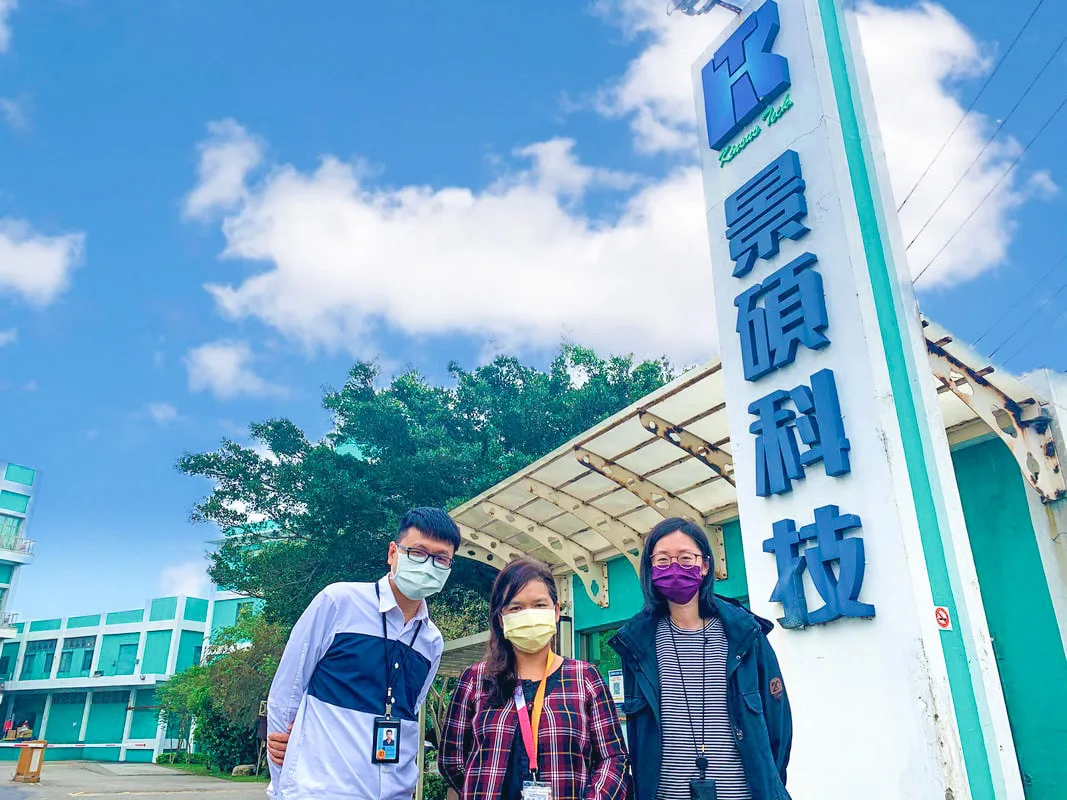
Above photo: From left, Kun-Ting Wu, Vice President of Information Technology Division; Hsueh-Ping Chien, Senior Manager of Product Integration Department; and Yen-Ling Chang, Senior Director of Quality Systems Department, Kinsus Interconnect Technology Corporation.
- Published on
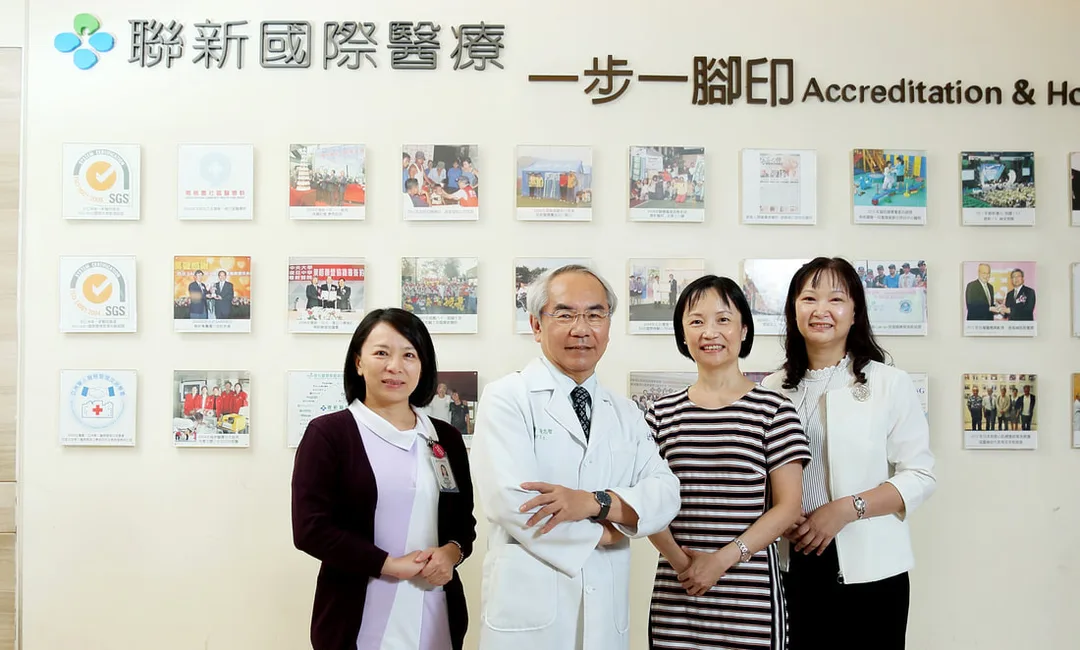
From left: Mei-Hui Hsieh, Director of the Nursing Department of Landseed Hospital; Chung-Chih Huang, President of Landseed Hospital; Ling-Hua Chang, Vice-President of Landseed Hospital; and Li-Li Chen, Supervisor of Landseed Hospital.
- Published on
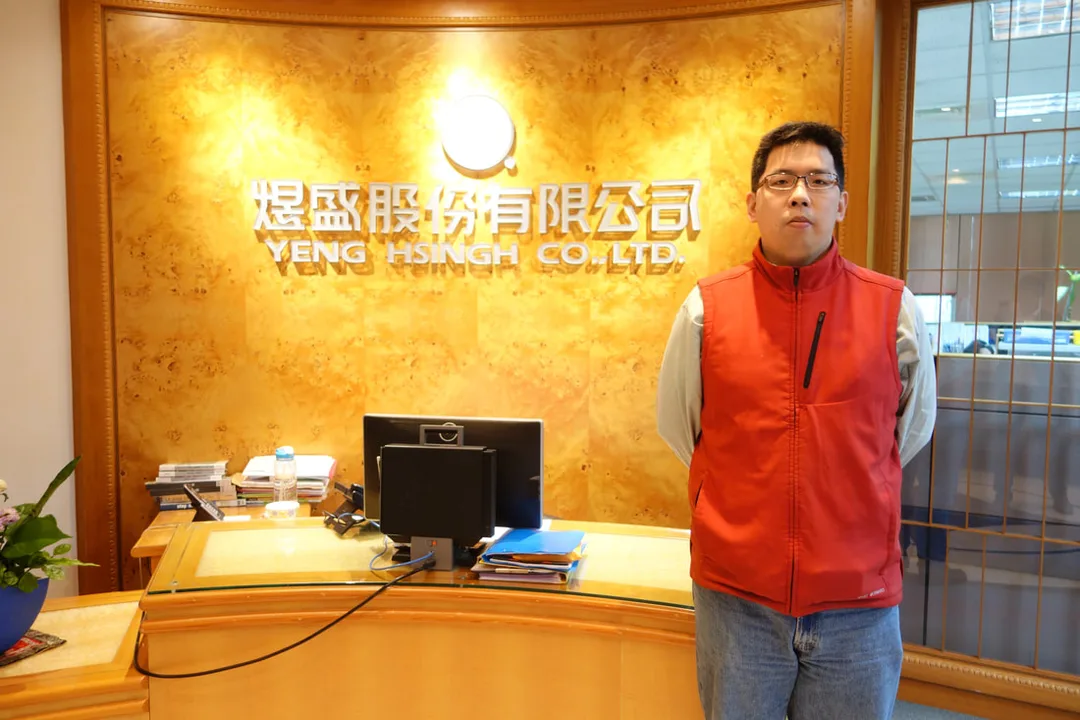
↑Assistant Manager Chang Chi-Chung, IT Center, YENG HSINGH CO., LTD.
- Published on
For Shinkong Insurance Co., Ltd. (hereinafter referred to as "Shinkong Insurance"), "human" is the most import issue of management. Hence, Shinkong Insurance has built and introduced an "organizational memory management system" that innovatively integrates "knowledge management", "customer relationship management" and "organizational memory" to ensure customer satisfaction and improvement of the sense of achievement and work satisfaction of the employees.
Since entering the property insurance industry, I have been thinking of how to help new employees understand the company within the shortest period of time. For this, Shinkong Insurance uses computers and software as aids in helping employees understand the company and the range of their duties in a short time. Especially, employees may not know what their colleagues are doing and the handover of the work is not carried out systematically when they are transferred or moved to another department, so they waste much time in engagement or learning from the very beginning and, nevertheless, they cannot achieve the goal of their work. I discussed my idea with the colleagues of the IT department and planned to create a basic and dynamic information source for the customer, product information and active customer care for customer satisfaction using a complete "organizational memory system" and software like Heart-Run (Note 1). The Vitals/KM system was taken into account to contain educational training courses; FAQs, experiential knowledge and so on, perform knowledge feedback and sharing, and help employees in their learning and growth. The functions, announcements, relevant regulations and operating guidelines must be established to ensure passing on the experience and controlling the business processes with organizational memory as the basis.
Since entering the property insurance industry, I have been thinking of how to help new employees understand the company within the shortest period of time. For this, Shinkong Insurance uses computers and software as aids in helping employees understand the company and the range of their duties in a short time. Especially, employees may not know what their colleagues are doing and the handover of the work is not carried out systematically when they are transferred or moved to another department, so they waste much time in engagement or learning from the very beginning and, nevertheless, they cannot achieve the goal of their work. I discussed my idea with the colleagues of the IT department and planned to create a basic and dynamic information source for the customer, product information and active customer care for customer satisfaction using a complete "organizational memory system" and software like Heart-Run (Note 1). The Vitals/KM system was taken into account to contain educational training courses; FAQs, experiential knowledge and so on, perform knowledge feedback and sharing, and help employees in their learning and growth. The functions, announcements, relevant regulations and operating guidelines must be established to ensure passing on the experience and controlling the business processes with organizational memory as the basis.
Breakthrough of "three difficulties" in personnel management
Property insurance is a professional industry, and "man" is the most important factor in its professionalism. However, there are "three difficulties" encountered frequently in personnel management. First, "difficult educational training" of new employees; second, "difficult experience inheritance" due to turnover of trained talents; and last, "difficult communication and coordination" due to serious egoism reflected in numerous property insurance products.
In addition to collecting detailed data systematically, appropriate use of the "organizational memory management system" requires the employee to "find" data directly rather than have no way of finding data, though there are many in the computer. Therefore, fast "search" is a very important function.
We constructed the system while asking employees to collect data and used this system to integrate product information, laws, regulations and guidelines. Employees were requested to read the data in the system as they would be used to build an item pool later. The employees would have a test to verify what they have learned in order to demonstrate the effectiveness of the educational training.
Customer information was maintained by salespersons in the past and many salespersons left office along with their customers. Therefore, we use the CRM system to help employees understand and trace old customers. This is also a useful tool to develop new customers because "one recommendation from an acquaintance is better than ten cold calls". The requirements of customers can be met more satisfactorily and good customer relationship is established and maintained using this excellent CRM system.
I have said many times that there are two kinds of customers. One is the external customer and the other is the internal customer (i.e. the employee). Both needs to be managed appropriately and good tools are needed to aid in the management and follow-up actions. In addition to providing service that customers need, active care of the customers and service beyond their requests are of utmost importance to strengthen their loyalty.
Property insurance is a professional industry, and "man" is the most important factor in its professionalism. However, there are "three difficulties" encountered frequently in personnel management. First, "difficult educational training" of new employees; second, "difficult experience inheritance" due to turnover of trained talents; and last, "difficult communication and coordination" due to serious egoism reflected in numerous property insurance products.
In addition to collecting detailed data systematically, appropriate use of the "organizational memory management system" requires the employee to "find" data directly rather than have no way of finding data, though there are many in the computer. Therefore, fast "search" is a very important function.
We constructed the system while asking employees to collect data and used this system to integrate product information, laws, regulations and guidelines. Employees were requested to read the data in the system as they would be used to build an item pool later. The employees would have a test to verify what they have learned in order to demonstrate the effectiveness of the educational training.
Customer information was maintained by salespersons in the past and many salespersons left office along with their customers. Therefore, we use the CRM system to help employees understand and trace old customers. This is also a useful tool to develop new customers because "one recommendation from an acquaintance is better than ten cold calls". The requirements of customers can be met more satisfactorily and good customer relationship is established and maintained using this excellent CRM system.
I have said many times that there are two kinds of customers. One is the external customer and the other is the internal customer (i.e. the employee). Both needs to be managed appropriately and good tools are needed to aid in the management and follow-up actions. In addition to providing service that customers need, active care of the customers and service beyond their requests are of utmost importance to strengthen their loyalty.
Understanding employees at lunch time
"Man" is the focus in the promotion of knowledge management. When I joined Shinkong Insurance, all employees were unfamiliar to me. So, I asked them to fill out an information form when I took up my post. In addition to the basic information and duties of the employees, I asked them to attach their photos to the form. This was helpful for me to know every employee. I also used the IPO (Input Process Output) method to understand the basis on which they did their daily jobs and helped them understand what was correct or wrong in their work. Initially, many employees did not know how to fill out the form and left most of the fields empty, indicating that the internal audit and control of Shinkong Insurance must be improved appropriately.
Then, I made an arrangement to have lunch with the employees three days a week so that I can understand them more. In this way, I had lunch with all employees, including the telephone operator in the head office, and they would know what they were doing and what they should do in their conversations with me. Impressively, a telephone operator came to me and asked if she could have another lunch with me because she was so nervous to talk to me at the first lunch time. This made me pleasantly surprised. Besides, I invited all employees of the service office that ranked first in the performance to a meal. So, I made a joke and said "it is not difficult to have a meal with me. You only need to win the first place."
"Man" is the focus in the promotion of knowledge management. When I joined Shinkong Insurance, all employees were unfamiliar to me. So, I asked them to fill out an information form when I took up my post. In addition to the basic information and duties of the employees, I asked them to attach their photos to the form. This was helpful for me to know every employee. I also used the IPO (Input Process Output) method to understand the basis on which they did their daily jobs and helped them understand what was correct or wrong in their work. Initially, many employees did not know how to fill out the form and left most of the fields empty, indicating that the internal audit and control of Shinkong Insurance must be improved appropriately.
Then, I made an arrangement to have lunch with the employees three days a week so that I can understand them more. In this way, I had lunch with all employees, including the telephone operator in the head office, and they would know what they were doing and what they should do in their conversations with me. Impressively, a telephone operator came to me and asked if she could have another lunch with me because she was so nervous to talk to me at the first lunch time. This made me pleasantly surprised. Besides, I invited all employees of the service office that ranked first in the performance to a meal. So, I made a joke and said "it is not difficult to have a meal with me. You only need to win the first place."
Share of the experience "around Taiwan"
After being familiar with the employees, I traveled "around Taiwan" In addition to conversations with the employees of 23 branches and service offices, I told them to think what they were doing because it was important to do the right things with the right concepts. New employees did not know anything at the initial stage in the company and should "learn" actively and asked questions explicitly. "Thinking" what was right was needed after learning and some "innovations" should be added to the thinking. "Implementation" was the next step and experience must be written down clearly and placed in the system for "passing-on". The "learning, thinking, innovation, implementation and passing-on" formed the promotion and sharing process of knowledge.
After being familiar with the employees, I traveled "around Taiwan" In addition to conversations with the employees of 23 branches and service offices, I told them to think what they were doing because it was important to do the right things with the right concepts. New employees did not know anything at the initial stage in the company and should "learn" actively and asked questions explicitly. "Thinking" what was right was needed after learning and some "innovations" should be added to the thinking. "Implementation" was the next step and experience must be written down clearly and placed in the system for "passing-on". The "learning, thinking, innovation, implementation and passing-on" formed the promotion and sharing process of knowledge.
Writing and sharing what have been learned
When I came to Shinkong Insurance, the employees were nervous with me because I was unfamiliar to them and they did not know what I was planning to do. However, after the lunches and face-to-face communications, they could perceive my intention and easy going characteristics, and understood the direction of their work. In this way, I gradually narrowed the gap and created trust between me and the employees.
But more than this, I started writing after the lunches and shared a small story with the employees every week. Responses were acquired from the employees after a period of time and, by doing so, I could learn some stories or edification that they shared with me. The most significant change in the employees during this interaction was their willingness to actively express what they thought. This was very helpful to the work and I as a leader should go in front of them and act as a model. Now, good articles and thinking are promoted at the morning meetings in every branch. This is a good sharing mechanism and we put these data in the KM system to share them with all the employees.
When I came to Shinkong Insurance, the employees were nervous with me because I was unfamiliar to them and they did not know what I was planning to do. However, after the lunches and face-to-face communications, they could perceive my intention and easy going characteristics, and understood the direction of their work. In this way, I gradually narrowed the gap and created trust between me and the employees.
But more than this, I started writing after the lunches and shared a small story with the employees every week. Responses were acquired from the employees after a period of time and, by doing so, I could learn some stories or edification that they shared with me. The most significant change in the employees during this interaction was their willingness to actively express what they thought. This was very helpful to the work and I as a leader should go in front of them and act as a model. Now, good articles and thinking are promoted at the morning meetings in every branch. This is a good sharing mechanism and we put these data in the KM system to share them with all the employees.
Leading supervisors to give lectures and passing down professional experience and knowledge
The power of a single person is limited, so I started requesting and encouraging other supervisors to give lectures to the employees. The 8 supervisors in the head office were in charge during the initial phase and every one of them must give 27 professional lectures on educational training. The lecture was recorded to make VCDs and share them with other employees. This urged the supervisors to summarize the knowledge that they have learned during their preparations for the lecture. In this way, knowledge was not retained only in one’s head any more, but organized systematically and shared with the employees. This was not only very helpful to mine tacit knowledge but is also a good opportunity for interaction through the questions that the audience asked. The supervisors who opposed initially have made a breakthrough in their performance gradually because they have developed a sense of achievement and became more confident. They can perceive the effectiveness of the sharing of knowledge after a period of time.
Shinkong Insurance arranges cross-visit training for sales manages. They may select three departments from which they want to learn most and have a 3-day visit to each of the selected departments within 6 months. In addition to taking photos as evidence, they must prepare an SWOT analysis and learning report (Fig. 2) within half a month after visiting a department. The photos, together with the report, are then sent to me so that I can understand what they have learned. The mangers can also take this opportunity to understand what other employees are doing. This learning approach has never been implemented before. What is most important is the experience in learning and sharing, which is hard to come by.I record the mailing time and method of each mail to observe the cost concept of the managers and their habit of doing things. I can learn more about the managers in this way.
The power of a single person is limited, so I started requesting and encouraging other supervisors to give lectures to the employees. The 8 supervisors in the head office were in charge during the initial phase and every one of them must give 27 professional lectures on educational training. The lecture was recorded to make VCDs and share them with other employees. This urged the supervisors to summarize the knowledge that they have learned during their preparations for the lecture. In this way, knowledge was not retained only in one’s head any more, but organized systematically and shared with the employees. This was not only very helpful to mine tacit knowledge but is also a good opportunity for interaction through the questions that the audience asked. The supervisors who opposed initially have made a breakthrough in their performance gradually because they have developed a sense of achievement and became more confident. They can perceive the effectiveness of the sharing of knowledge after a period of time.
Shinkong Insurance arranges cross-visit training for sales manages. They may select three departments from which they want to learn most and have a 3-day visit to each of the selected departments within 6 months. In addition to taking photos as evidence, they must prepare an SWOT analysis and learning report (Fig. 2) within half a month after visiting a department. The photos, together with the report, are then sent to me so that I can understand what they have learned. The mangers can also take this opportunity to understand what other employees are doing. This learning approach has never been implemented before. What is most important is the experience in learning and sharing, which is hard to come by.I record the mailing time and method of each mail to observe the cost concept of the managers and their habit of doing things. I can learn more about the managers in this way.
Creation of a "share-based" corporate culture
The most important value that the "organizational memory management system" brings to Shinkong Insurance is that all employees have now developed the concept of "sharing". Since there is a great deal of knowledge to be shared in the insurance industry, the employees gradually changed their concept from "damage compensation" to "loss control". This is the final and most important goal of insurance. I have learned a lot and grown significantly during this promotion period. The company has enjoyed an increasingly greater business achievement, too. Though not having the operating or sales background in the property insurance industry, I, perhaps, can expound my "New Five NOT" approach.I was nobody in the property insurance industry when I started this business. No one knew me and I was a person "not seen" by other people and my colleagues in the industry did "not respect me" and treated me as a questionable candidate for my post. When they heard of my approaches, they did "not understand" what I was doing. When they found that my approaches worked, they could "not learn" from me effectively. Finally, I of course wished that the other insurance companies in the industry are "not able to defeat Shinkong Insurance". We cooperated with Vitals ESP for the construction of the system because the Vitals ESP team was sincere and provided customized solutions to meet our requirements. The cooperation was pleasant, and I believe there are many opportunities to cooperate with each other in the future.
The most important value that the "organizational memory management system" brings to Shinkong Insurance is that all employees have now developed the concept of "sharing". Since there is a great deal of knowledge to be shared in the insurance industry, the employees gradually changed their concept from "damage compensation" to "loss control". This is the final and most important goal of insurance. I have learned a lot and grown significantly during this promotion period. The company has enjoyed an increasingly greater business achievement, too. Though not having the operating or sales background in the property insurance industry, I, perhaps, can expound my "New Five NOT" approach.I was nobody in the property insurance industry when I started this business. No one knew me and I was a person "not seen" by other people and my colleagues in the industry did "not respect me" and treated me as a questionable candidate for my post. When they heard of my approaches, they did "not understand" what I was doing. When they found that my approaches worked, they could "not learn" from me effectively. Finally, I of course wished that the other insurance companies in the industry are "not able to defeat Shinkong Insurance". We cooperated with Vitals ESP for the construction of the system because the Vitals ESP team was sincere and provided customized solutions to meet our requirements. The cooperation was pleasant, and I believe there are many opportunities to cooperate with each other in the future.
- Published on
Over the past years, the headquarters of Taichung Veterans General Hospital (TVGH) has actively introduced various types of information systems such that the hospital has become a benchmark in the digitization of medical hospitals in Taiwan. Particularly, since 2008, TVGH has introduced the KM system in such a way that it has not only created benefits in the hospital accreditation but also achieved the medical care and management process improvement mechanism with the diverse innovation of KM. Consequently, it is able to create holistic medical care services covering all aspects and to establish a solid foundation.
The medical quality and care system in Taiwan are well-known in the world. This is a result achieved through the research and development of the entire medical system as well as the efforts of professionals. The medical hospitals in Taiwan are able to utilize ICT technology to improve medical service standards, which is the key to improve medical quality. Particularly, for TVGH constantly focusing on the holistic medical care, the hospital has continuously introduced various types of ICT technologies in recent years in order to create various innovative medical care services. The President of TVGH, Hui-Heng Hsu, indicates that under the complete ICT system infrastructure of TVGH, the introduction of the knowledge management system (KM) allows the extension of knowledge, constant improvement of processes and continuous innovation of services in order to establish a foundation for the holistic medical care and to allow TVGH to become the benchmarking hospital in the domestic medical industry.
KM integrated with hospital accreditation to achieve efficiency, environmental protection and manpower savings
The professions involved in a medical system can be extremely complicated and broad. In addition, since the operating processes and standards of the various materials are different along with the rapid development of medical knowledge, the volume of knowledge accumulated by the hospital is enormous. President Hsu states that to integrate the cross-unit knowledge power of the hospital, TVGH has already introduced Knowledge Management (hereinafter referred to as “KM”) system in 2008. Through the establishment of knowledge management launch committee, each unit forms the seed teachers and for various types of clinical teaching discussion records, project execution outcomes, medical treatment processes and standards, overall audits and management are performed gradually in order to integrate all of the knowledge content that is originally scattered in different units into one system such that various types of medical knowledge and operational standards can be realized in paperless operations.
A few years after the introduction of KM, TVGH started utilized multi-dimension classification links of KM to greatly improve the daily management and supervision of the hospital. Accordingly, in 2014, when the Taiwan Society of Emergency Medicine performed the emergency medical physician training hospital survey, it applied the KM system in the accreditation for the first time. President Hsu expressed that the accreditation operation was relatively complicated, and that in the past, the hospital was often required to deploy a large number of manpower in sorting complicated articles and to print out great quantities of documents for use of the surveyors. Therefore, when TVGH used the KM system as the accreditation outcome demonstrative platform during the survey at that time, the review surveyors were impressed by such system.
Subsequently, TVGH further developed complete functions for the hospital accreditation management system, including the function for allowing supervisors to add follow-up assignments at any time and allowing staff to use the discussion function for various conditions. The system is able to remind staff about relevant matters through e-mail in order to allow the internal communication, interaction, overall accreditation operations in the hospital to be performed smoothly.
President Hsu said that currently, TVGH utilizes KM not only at the hospital and in teaching hospital accreditation but also at various accreditations for a total of 36 items, including evaluation supervision of MOHW, hospital approval of various physician trainings and cancer diagnosis quality certification. In addition, TVGH is able to demonstrate outstanding performance in each accreditation. For example, in the2014 hospital accreditation and teaching hospital accreditation trial evaluation, through the precise search function of the KM system, during the auditing of medical care personnel operations by the review surveyors, the cooperating personnel was able to use a portable iPAD to obtain information directly from the system in order to verify whether or not the operations of the operating personnel complied with the SOP. After the accreditation, online continuous follow-up can also be used. Consequently, with numerous benefits of the system, TVGH has received great recognition.
The professions involved in a medical system can be extremely complicated and broad. In addition, since the operating processes and standards of the various materials are different along with the rapid development of medical knowledge, the volume of knowledge accumulated by the hospital is enormous. President Hsu states that to integrate the cross-unit knowledge power of the hospital, TVGH has already introduced Knowledge Management (hereinafter referred to as “KM”) system in 2008. Through the establishment of knowledge management launch committee, each unit forms the seed teachers and for various types of clinical teaching discussion records, project execution outcomes, medical treatment processes and standards, overall audits and management are performed gradually in order to integrate all of the knowledge content that is originally scattered in different units into one system such that various types of medical knowledge and operational standards can be realized in paperless operations.
A few years after the introduction of KM, TVGH started utilized multi-dimension classification links of KM to greatly improve the daily management and supervision of the hospital. Accordingly, in 2014, when the Taiwan Society of Emergency Medicine performed the emergency medical physician training hospital survey, it applied the KM system in the accreditation for the first time. President Hsu expressed that the accreditation operation was relatively complicated, and that in the past, the hospital was often required to deploy a large number of manpower in sorting complicated articles and to print out great quantities of documents for use of the surveyors. Therefore, when TVGH used the KM system as the accreditation outcome demonstrative platform during the survey at that time, the review surveyors were impressed by such system.
Subsequently, TVGH further developed complete functions for the hospital accreditation management system, including the function for allowing supervisors to add follow-up assignments at any time and allowing staff to use the discussion function for various conditions. The system is able to remind staff about relevant matters through e-mail in order to allow the internal communication, interaction, overall accreditation operations in the hospital to be performed smoothly.
President Hsu said that currently, TVGH utilizes KM not only at the hospital and in teaching hospital accreditation but also at various accreditations for a total of 36 items, including evaluation supervision of MOHW, hospital approval of various physician trainings and cancer diagnosis quality certification. In addition, TVGH is able to demonstrate outstanding performance in each accreditation. For example, in the2014 hospital accreditation and teaching hospital accreditation trial evaluation, through the precise search function of the KM system, during the auditing of medical care personnel operations by the review surveyors, the cooperating personnel was able to use a portable iPAD to obtain information directly from the system in order to verify whether or not the operations of the operating personnel complied with the SOP. After the accreditation, online continuous follow-up can also be used. Consequently, with numerous benefits of the system, TVGH has received great recognition.
KM innovation with unlimited optimization processes for greater medial quality improvement
“In fact, integration with accreditation is only a small part of KM application. Through the KM system, the values that can be created by a hospital are exceptionally great. “President Hsu also explained various examples of the benefits of KM applied in the hospital, including the case management of clinical teaching, teaching historical record management, teaching outcome statistical analysis, document asset repetitive application and so on, providing tremendous help to the achievement of holistic medical quality and care service for TVGH.
President Hsu provided the example that KM can be applied to the maintenance management of the standard operating procedures such that more than 2,700 copies of the ISO standard operation procedures (SOP) documents in TVGH can be managed completely, and medical personnel can log onto the system to search SOP. In addition, the content viewed can be ensured to be the latest version such that the hassle of misuse of numerous versions can be prevented. During the internal audit and verification, the historical operating documents and improvement project records can be searched. Therefore, it provides a great helps to the improvement of the hospital operating process and increase of medical quality as well as patient safety.
Even for the medical treatment aspect, KM can also be helpful. President Hsu said that in the field of endocrine and metabolic disorders for the treatment of diabetes, the glucose and glucose-target-rate of patients are mostly used as the indicators. Accordingly, the hospital can use the KM system to understand the target-rate of patients treated by each physician, and then the data accumulated over the years can be used as the trend indicator in order to perform peer comparison and subsequent improvement and follow-up; therefore, the medical treatment benefits of the hospital on chronic patients can be increased.
“In fact, integration with accreditation is only a small part of KM application. Through the KM system, the values that can be created by a hospital are exceptionally great. “President Hsu also explained various examples of the benefits of KM applied in the hospital, including the case management of clinical teaching, teaching historical record management, teaching outcome statistical analysis, document asset repetitive application and so on, providing tremendous help to the achievement of holistic medical quality and care service for TVGH.
President Hsu provided the example that KM can be applied to the maintenance management of the standard operating procedures such that more than 2,700 copies of the ISO standard operation procedures (SOP) documents in TVGH can be managed completely, and medical personnel can log onto the system to search SOP. In addition, the content viewed can be ensured to be the latest version such that the hassle of misuse of numerous versions can be prevented. During the internal audit and verification, the historical operating documents and improvement project records can be searched. Therefore, it provides a great helps to the improvement of the hospital operating process and increase of medical quality as well as patient safety.
Even for the medical treatment aspect, KM can also be helpful. President Hsu said that in the field of endocrine and metabolic disorders for the treatment of diabetes, the glucose and glucose-target-rate of patients are mostly used as the indicators. Accordingly, the hospital can use the KM system to understand the target-rate of patients treated by each physician, and then the data accumulated over the years can be used as the trend indicator in order to perform peer comparison and subsequent improvement and follow-up; therefore, the medical treatment benefits of the hospital on chronic patients can be increased.
Internal/external resources with accelerated KM innovation
The reason that TVGH is able to apply KM to such an extent is related to the promoter’s understanding on the utilization of internal and external innovation resources. For the internal system of the hospital, TVGH has continuously promoted the “knowledge management expansion application contest activities” over the past years in order to seek employee creativity and to develop greater KM applications. President Hsu indicated that for the contest held annually, the KM promotion team would request the teams from different departments to participate in the accreditation and management team KM creativity application contest and the winner would receive the prize issued by the hospital as an encouragement thereof. As a result, best creations can be encouraged from the staff, and the sharing and learning effects can also be achieved through such method.
For the external system of the hospital, TVGH has maintained close interaction with the KM system solution provider, Galaxy Software Services (GSS), continuously. Through constant feedbacks on the information of medical service field knowledge from TVGH to GSS, GSS information is able to make adjustments on the system based on its IT professionals and both parties are able to discover greater KM development. Consequently, KM application can be deeply rooted in TVGH thoroughly, and GSS can also further improve the functions of the KM system, creating a win-win situation for both parties.
President Hsu said that the extensive KM application in TVGH has attracted numerous other domestic medical centers to visit TVGH, and TVGH has also received the honors of “2014 EPBA international project management benchmark enterprise award” and the ‘2015 PMI Taiwan project management benchmark enterprise award.”
In view of the overall KM application in TVGH, knowledge management is certainly not referring to the mere digitization of paper documents, but it also involves further thinking on how to discover new values from the vast amount of knowledge after the systematization of knowledge, in order to further improve the operational management medical quality of the hospital. It can even further achieve a cohesive corporate culture and improve team communication as well as cooperation mechanism, thereby creating a more prospective medical service path for the hospital.
The reason that TVGH is able to apply KM to such an extent is related to the promoter’s understanding on the utilization of internal and external innovation resources. For the internal system of the hospital, TVGH has continuously promoted the “knowledge management expansion application contest activities” over the past years in order to seek employee creativity and to develop greater KM applications. President Hsu indicated that for the contest held annually, the KM promotion team would request the teams from different departments to participate in the accreditation and management team KM creativity application contest and the winner would receive the prize issued by the hospital as an encouragement thereof. As a result, best creations can be encouraged from the staff, and the sharing and learning effects can also be achieved through such method.
For the external system of the hospital, TVGH has maintained close interaction with the KM system solution provider, Galaxy Software Services (GSS), continuously. Through constant feedbacks on the information of medical service field knowledge from TVGH to GSS, GSS information is able to make adjustments on the system based on its IT professionals and both parties are able to discover greater KM development. Consequently, KM application can be deeply rooted in TVGH thoroughly, and GSS can also further improve the functions of the KM system, creating a win-win situation for both parties.
President Hsu said that the extensive KM application in TVGH has attracted numerous other domestic medical centers to visit TVGH, and TVGH has also received the honors of “2014 EPBA international project management benchmark enterprise award” and the ‘2015 PMI Taiwan project management benchmark enterprise award.”
In view of the overall KM application in TVGH, knowledge management is certainly not referring to the mere digitization of paper documents, but it also involves further thinking on how to discover new values from the vast amount of knowledge after the systematization of knowledge, in order to further improve the operational management medical quality of the hospital. It can even further achieve a cohesive corporate culture and improve team communication as well as cooperation mechanism, thereby creating a more prospective medical service path for the hospital.
- Published on
In the 116th anniversary of Changhua Christian Hospital, the Hospital continues to treasure the knowledge and experience passed on from the ancestors, which are the most valuable assets of the Hospital. “Knowledge management” is the starting point for the system to perform checking, planning, circulation, supervision, innovation and management. To improve the competitiveness, a lot of domestic and international giant corporations and medical institutions have invested greatly in the knowledge management. The Hospital will introduce the knowledge management system and convene the “Knowledge Management for Physician Conference” in light of conveying various concepts of knowledge management and future plan launches of the Hospital through such start of physician conference in order to create knowledge exchange and sharing environment. Consequently, the medical service innovation ability can be improved such that the experience of ancestors can become the cornerstone for innovation of the Hospital and to become the driving force for the sustainable operation of the Hospital.
Excel for excellence Knowledge management as the cornerstone
Dr. Shou-Jen Kuo, President of Changhua Christian Hospital expresses the sincere appreciation toward the former president, Chao-Sheng Huang, for his efforts in applying the industrial quality concept to medical year starting from twenty years ago. During such period, the Hospital continues to participate in the studies around the world in order to understand how to effectively manage and achieve sustainability based on “quality”. However, having such a tool is not sufficient, the Hospital has also introduced a lot of concepts, including the ones not only one’s own profession, but also the concept of “management.” Nevertheless, it is still not adequate, and to achieve knowledge management, the integration of knowledge is also required. Through efforts with our partner Galaxy Software Services Corporation and after years of preparation and cooperation, we are able to make breakthroughs to have greater tools and to compete with others in the world such that we are able to lead in the industry. If we cannot stand at the leading edge and without competitiveness, then we will fall behind and may be defeated in the competition.
Dr. Shou-Jen Kuo indicates that during the economic recession, our team shall prepare ourselves greatly and seek for opportunities with the best effort for breakthroughs; in addition, winners are always the ones with the best preparation. During the period of four to five years ago, the Hospital personnel event traveled to the regions of Hainan, Harbin and Henan as well as numerous inland regions, even to Vietnam and Myanmar, for the establishment of medical service platforms. Regardless of the harsh environment, we believe that we are the greatest; regardless of the harsh environment, we are the most competitive; regardless of the harsh environment, we are the leader; based on such concepts, the Hospital is committed to become a “future” leader.
Dr. Shou-Jen Kuo, President of Changhua Christian Hospital expresses the sincere appreciation toward the former president, Chao-Sheng Huang, for his efforts in applying the industrial quality concept to medical year starting from twenty years ago. During such period, the Hospital continues to participate in the studies around the world in order to understand how to effectively manage and achieve sustainability based on “quality”. However, having such a tool is not sufficient, the Hospital has also introduced a lot of concepts, including the ones not only one’s own profession, but also the concept of “management.” Nevertheless, it is still not adequate, and to achieve knowledge management, the integration of knowledge is also required. Through efforts with our partner Galaxy Software Services Corporation and after years of preparation and cooperation, we are able to make breakthroughs to have greater tools and to compete with others in the world such that we are able to lead in the industry. If we cannot stand at the leading edge and without competitiveness, then we will fall behind and may be defeated in the competition.
Dr. Shou-Jen Kuo indicates that during the economic recession, our team shall prepare ourselves greatly and seek for opportunities with the best effort for breakthroughs; in addition, winners are always the ones with the best preparation. During the period of four to five years ago, the Hospital personnel event traveled to the regions of Hainan, Harbin and Henan as well as numerous inland regions, even to Vietnam and Myanmar, for the establishment of medical service platforms. Regardless of the harsh environment, we believe that we are the greatest; regardless of the harsh environment, we are the most competitive; regardless of the harsh environment, we are the leader; based on such concepts, the Hospital is committed to become a “future” leader.
Integrate and gather innovation for internal knowledge Improve medical quality and patient safety
The medical application practice of the Changhua Christian Hospital Knowledge Management includes fast and accurate searches of various information inside and outside of the Hospital, providing facilitated knowledge learning and sharing ground, personalized section to increase the usage of the system by the staff, flexibly coping various types of different accreditations, and integrating various information in order to improve the medical quality and patient safety. The overall functions of the knowledge management system are able to effectively accumulate knowledge, including visual website operations, standardized forms, and it also covers various types of documents, management of documents and flexible knowledge database.
A multi-dimensional knowledge management structure includes the cross-unit document integration, hospital accreditation application, PGY accreditation application, various types of evaluation and internal audit applications. Precise search and personalized section include the simple search platform, quick content search, customized document tag, precise document search and personal favorite section. Knowledge summary statistics and analysis include the document abstract statistics, customized range for output, annual outcome analysis and annual document review.
Dr. Shou-Jen Kuo emphasizes that in Taiwan, a lot of institutions have implemented the KM(knowledge management); however, Changhua Christian Hospital is different from other institutions by providing a more advanced and complete system with its own unique characteristics. Such characteristics can become a tool for duplication and expansion of application in order to create value for the Hospital. In addition, such value can be the branding value of the Changhua Christian Hospital, which can be unlimited. Under such a new structure and a new start, we look forward to creating a promising future for the Changhua Christian Hospital
The medical application practice of the Changhua Christian Hospital Knowledge Management includes fast and accurate searches of various information inside and outside of the Hospital, providing facilitated knowledge learning and sharing ground, personalized section to increase the usage of the system by the staff, flexibly coping various types of different accreditations, and integrating various information in order to improve the medical quality and patient safety. The overall functions of the knowledge management system are able to effectively accumulate knowledge, including visual website operations, standardized forms, and it also covers various types of documents, management of documents and flexible knowledge database.
A multi-dimensional knowledge management structure includes the cross-unit document integration, hospital accreditation application, PGY accreditation application, various types of evaluation and internal audit applications. Precise search and personalized section include the simple search platform, quick content search, customized document tag, precise document search and personal favorite section. Knowledge summary statistics and analysis include the document abstract statistics, customized range for output, annual outcome analysis and annual document review.
Dr. Shou-Jen Kuo emphasizes that in Taiwan, a lot of institutions have implemented the KM(knowledge management); however, Changhua Christian Hospital is different from other institutions by providing a more advanced and complete system with its own unique characteristics. Such characteristics can become a tool for duplication and expansion of application in order to create value for the Hospital. In addition, such value can be the branding value of the Changhua Christian Hospital, which can be unlimited. Under such a new structure and a new start, we look forward to creating a promising future for the Changhua Christian Hospital
- Published on
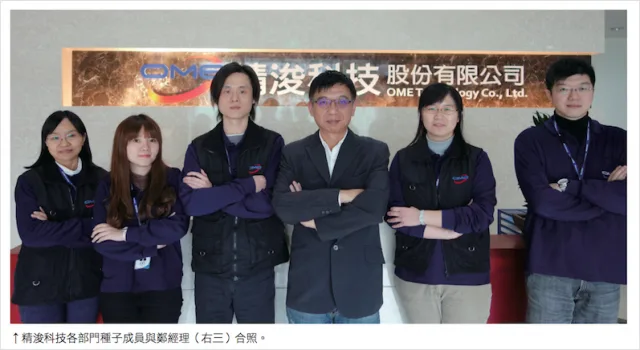
The linear drive components researched and developed with innovation by OME Technology Co., Ltd. have obtained several national patents and passed ISO9001, ISO13485 and GMP certificates. Its high-quality and -efficiency services have high market competitiveness. These products designed with prospect demands in the future international market are highly reliable and sophisticated. OME Technology devotes itself to the comprehensive quality management in the company. We regard quality as a core value, research and development as the driving force, customer service as the target to achieve the value of commodities. With continuous growth and advancement, we have established a brand reputation with excellent product quality.
- Published on
For the world, Wuri District in Taichung City may be an unfamiliar place. However, in the hearts of French farmers, KING TONY is the No. 1 Brand for agricultural machinery and hand tools. The hand tool plant in the Wuri Dist., Taichung is now 30 years old. Its business network covers more than 110 countries in the five continents of the world such as Germany, France, Mexico, Spain, U.S. and China.
"KING TONY" - a small hand tool with great knowledge.
"It is the leading enterprise of technical grade hand tools in Taiwan, the so-called hand tools include products such as sockets, screwdrivers, wrenches and pliers, etc", said Yang, the Deputy Manager of the Administration Department. In the hand tool industry in Taiwan, King Tony is just like a big brother with 98% of its products for export and some NT$ 1.7 billion business turnover by the whole group. It does not suffer from the impact from the emerging mainland market. "Our founder got the brand concept in the very early age. In his opinion, ODM only ends up in a vicious circle of hell where people fight for only one or two dollars!" The Deputy Manager of the Administration Department Yang said our company was identified as the private brand "King Tony" since early 1984. It has operations in the professional hand tool market of the world. We bring the little hand tools’ value up and turn them into designer products.
- Published on
Lin Yin-Cheng from the Drilling Engineering Department of the Exploration and Production Business Division, said in the CPC Monthly in February 2013 "'...the company is at the transition point between the old and new generations. Supervisors who are not able to take care of the continuity of a company are calamities for the company.' Thanks to this saying of Chen Jin-Fu, I decided to give my support by my actions."
"I am happy to apply what I have learned and I love all that have happened at the CPC Exploration and Production Business Division," said Chen Jin-Fu, Vice Director of the Exploration and Production Business Division, sincerely. What he said is completely reflected in his vitality to promote Knowledge Management (KM).
"I am happy to apply what I have learned and I love all that have happened at the CPC Exploration and Production Business Division," said Chen Jin-Fu, Vice Director of the Exploration and Production Business Division, sincerely. What he said is completely reflected in his vitality to promote Knowledge Management (KM).
- Published on
Fengqi Technologies, the former Shangyao Technology, is comprised of the professional members from the mechanical, programming, circuit, imaging and electromechanical integration fields. Major products of the company include semi-conductor back-end and LCD equipment. Industrial automation has become a mainstream since Taiwan entered the WTO. We make use of our techniques and experiences to expand the market for our own brand "Yotek". We have a station at the incubation center of the National Formosa University and hope for technical cooperation with leading companies in different industries around the world to spark R&D energy, promote another upgrade of the industries in Taiwan and improve our overall competitiveness.
We apply our core techniques mainly to R&D and manufacturing in the knowledge-intensive manufacturing industry. The business in Taiwan and China is authorized to our agents Hauman Technologies and Xizhan Technologies.
We apply our core techniques mainly to R&D and manufacturing in the knowledge-intensive manufacturing industry. The business in Taiwan and China is authorized to our agents Hauman Technologies and Xizhan Technologies.